.png)
.png)
The 2026 Horizon: How the Convergence of AGI and Hyper-Realistic CGI Will Redefine the Business Landscape
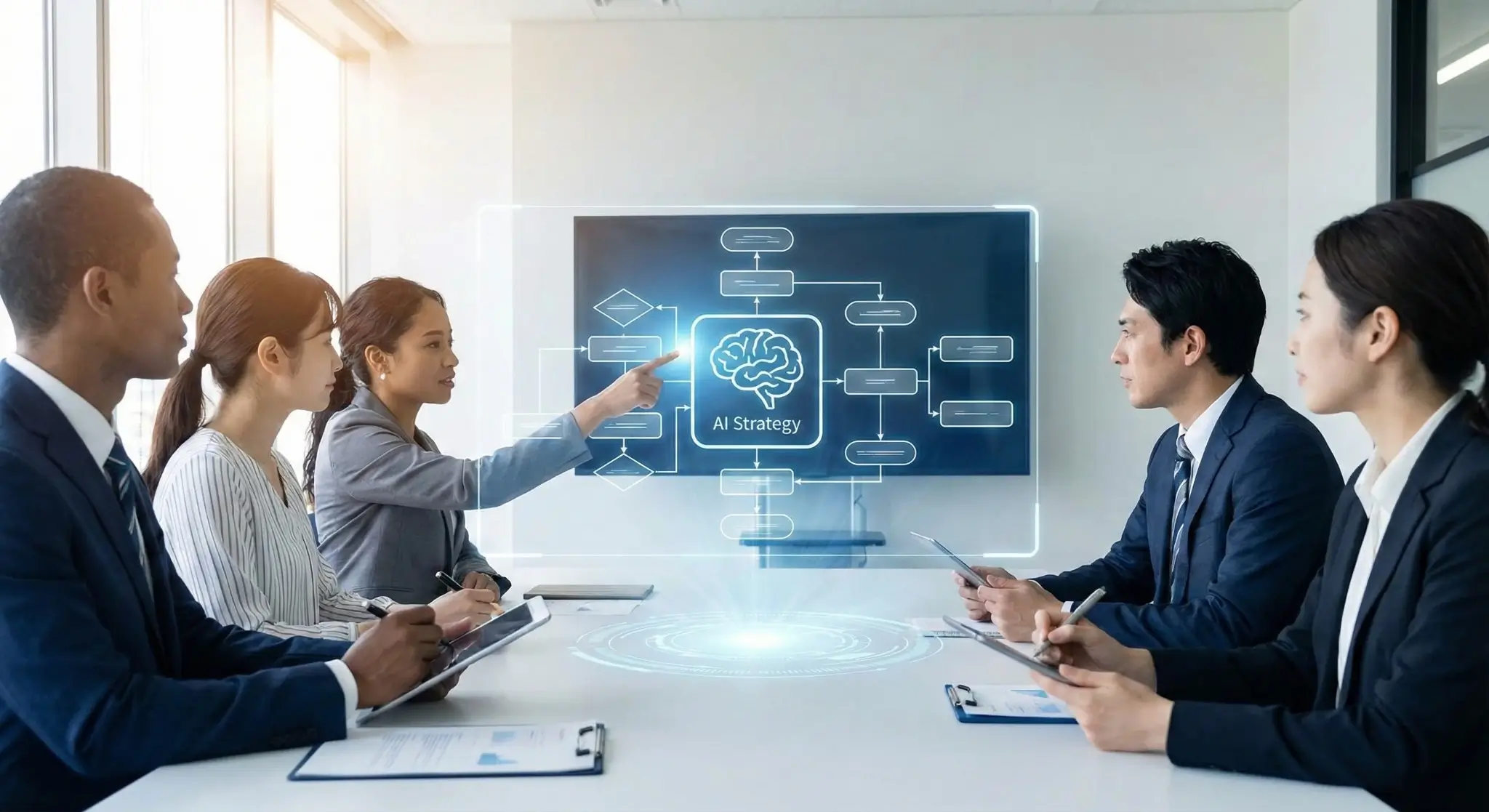
The current business landscape is dominated by what experts call "Narrow AI"—specialized tools designed to perform specific, isolated tasks with superhuman speed. We use LLMs to draft emails, computer vision to spot defects on an assembly line, and predictive algorithms to forecast sales. These tools are powerful, but they are brittle; they require constant human oversight and break down when faced with novel situations outside their training data.
As we look toward 2026, we are approaching a seismic shift that will make today's automation look primitive. We are moving from tools that "do" to systems that "think." The next frontier involves the powerful convergence of two distinct technologies: the emergence of early-stage Artificial General Intelligence (AGI) agents and the perfection of hyper-realistic Computer Generated Imagery (CGI).
For forward-thinking C-suites and business leaders, this isn't science fiction to be ignored. It is the new roadmap for survival and competitive advantage. The companies that win in the latter half of this decade won't just be using AI; they will be structurally rebuilt around it.
1. From "Narrow AI" to the Edge of AGI: The Rise of Autonomous Agents
The fundamental difference between the AI of 2024 and the systems we anticipate in 2026 lies in "agency." Today’s models are reactive. You provide a detailed prompt, and you get a detailed answer. They wait for instructions.
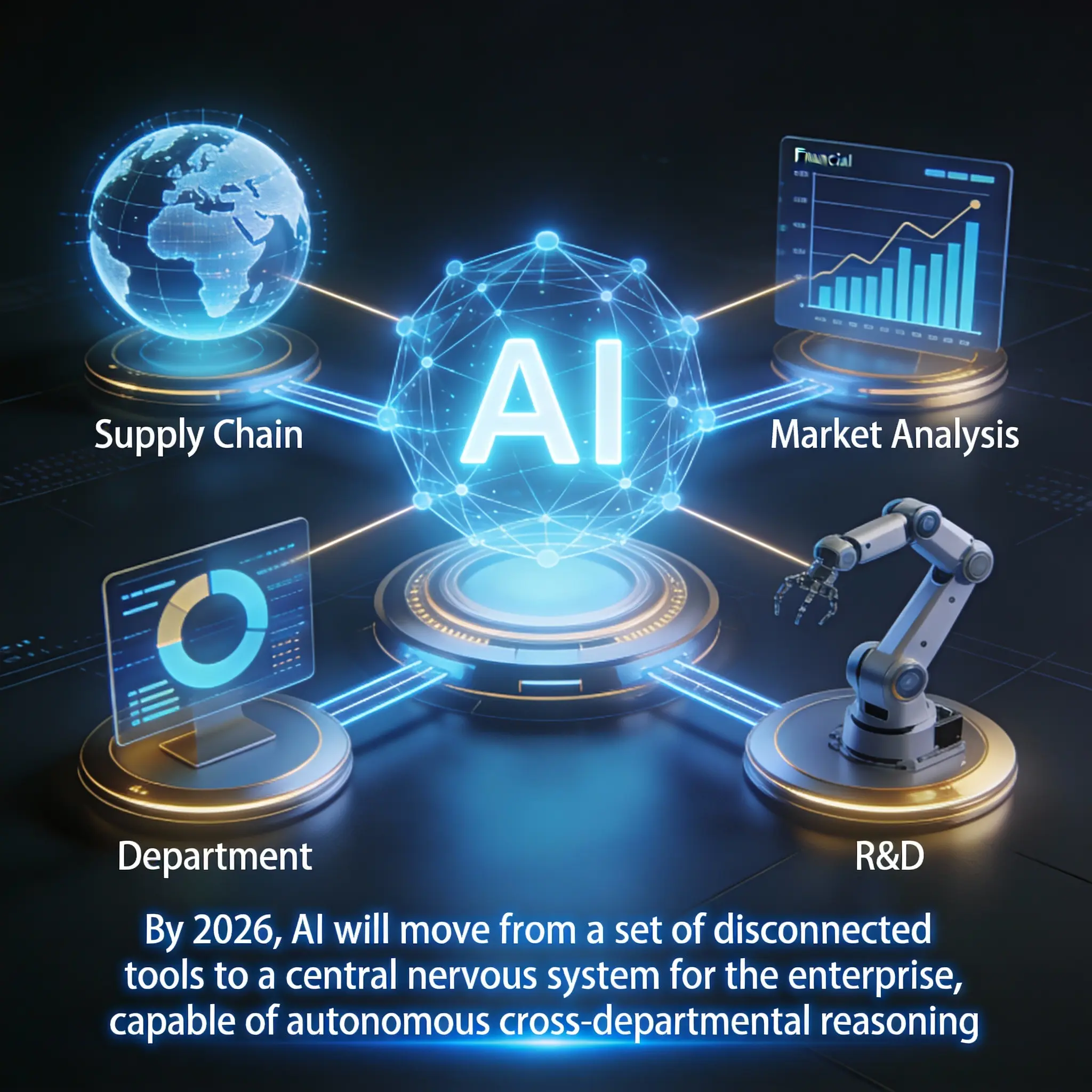
By 2026, we expect to see the widespread deployment of agentic AI systems that border on AGI capabilities. These systems won’t just wait for a task; they will be given a goal and will autonomously reason, plan, and execute multi-step workflows to achieve it.
The End of Micromanagement
Consider supply chain management. Today, an AI might predict a shortage of a key component based on current data. A human manager must then read that report, find alternative suppliers, negotiate pricing, and issue purchase orders.
In a 2026 enterprise powered by proto-AGI agents, the system would handle this entire loop without human intervention. The AI agent would:
- Detect the potential shortage months in advance by correlating weather patterns, geopolitical news, and supplier financial health.
- Reason that the current primary supplier is too high-risk.
- Autonomously identify and vet three alternative suppliers across different geographic regions.
- Initiate negotiations with all three simultaneously, using natural language processing to haggle for the best terms based on the company's predefined financial parameters.
- Execute the contract and reroute logistics, only notifying the human manager with a summary of the problem it already solved.
This shift from "human-in-the-loop" to "human-on-the-loop" fundamentally changes organizational structure. Middle management roles focused on coordination will disappear, replaced by roles focused on setting high-level strategic goals and auditing AI performance. The bottleneck of human decision-making speed is removed from operational processes.
2. Hyper-Realistic CGI: The Death of the Interface and the Birth of the Experience
While AGI handles the cold logic and backend reasoning, CGI (Computer Generated Imagery) will revolutionize the front-end experience. For decades, our interaction with digital systems has been mediated through abstract interfaces: keyboards, mice, touchscreens, and text boxes. We are now moving away from these abstractions toward natural, face-to-face digital interactions.
By 2026, the "uncanny valley"—that eerie feeling when looking at an almost-human digital face—will be largely a challenge of the past, solvable with real-time rendering power. This is not about cartoons or stylized avatars in the metaverse. We are talking about photorealistic digital humans that are indistinguishable from a video call with a real person.
Scaling the Human Connection
The business implication here is the infinite scalability of "human" connection. Today, your best salesperson, therapist, or financial advisor can only speak to one client at a time. Their expertise is finite and unscalable.
By combining the reasoning power of an AGI agent with a hyper-realistic CGI persona, businesses can clone their best people.
- Banking & Finance: Imagine a wealth management app where a photorealistic advisor—perhaps modeled after the firm's Chief Investment Officer—speaks to every client individually. It explains complex portfolio changes in plain language, answering questions in real-time, and reading the client's facial expressions via webcam to detect confusion or anxiety, adjusting its tone accordingly.
- Healthcare: A CGI nurse practitioner could provide 24/7 triage, conducting an initial visual diagnostic interview with a patient, asking follow-up questions based on verbal and non-verbal cues, and escalating to a human doctor only when necessary.
- Retail & Sales: Luxury brands can offer a personal concierge to every visitor on their website. A digital human stylist can look at you through your camera, analyze your skin tone and face shape, and recommend products, demonstrating how to apply them on its own face in real-time.
This fusion allows for empathy, trust, and rapport—qualities previously exclusive to human interaction—to be delivered digitally at zero marginal cost.
3. The Strategic Imperative: Building the Foundation Now
The convergence of AGI and CGI is not a technology you can simply "buy" in 2026 and plug into your existing business. It requires a fundamental restructuring of your data and operations today. Companies that are currently failing at basic data governance will be wholly unprepared for this future.
To prepare for 2026, leaders must take actionable steps now:
A. Unify and Clean Your Data
An AGI agent is only as good as the data it can access. If your customer data is siloed from your inventory data, and your financial data is locked in spreadsheets, an autonomous agent cannot reason effectively. You must invest in a unified data fabric that creates a single source of truth for your entire enterprise. Data hygiene is no longer an IT issue; it is a C-level survival issue.
B. Define "Guardrails" and Ethics
Before you grant an AI agent autonomy to negotiate contracts or speak to customers, you must define its operational boundaries. What is the maximum discount it can offer? What topics is it forbidden to discuss? Developing a robust framework for AI ethics and governance is crucial to prevent catastrophic reputation damage from a "rogue" agent.
C. Rethink Talent and Culture
The workforce of 2026 will need different skills. You will need fewer people who can rote-follow a process and more people who can design, audit, and manage complex AI systems. Your culture must shift from rewarding busywork to rewarding strategic thinking and the ability to collaborate effectively with digital intelligence.
Conclusion
The year 2026 is not far off. The innovations in AGI and CGI that seem experimental today will be the baseline expectations for doing business tomorrow. The organizations that thrive won't just be the ones that adopted AI tools to cut costs in 2024. They will be the ones that had the foresight to rebuild their entire operating model around the principles of autonomous reasoning and immersive, scalable digital experiences. The window to build this foundation is open now, but it is closing fast.